2026 TOYOTA HILUX
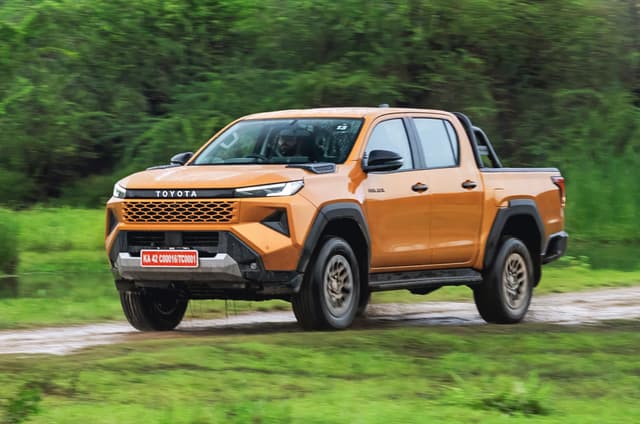
The new ninth generation Hilux arrives with an edgy style draped over a beefed-up chassis and reworked internals. We get behind the wheel to see what’s it like both on and off road.
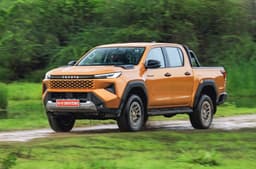
IMV platform sees massive update; front styling goes all angular
EXTERIOR
INTERIOR
Adequate cabin space, but not what you might expect given the overall size.
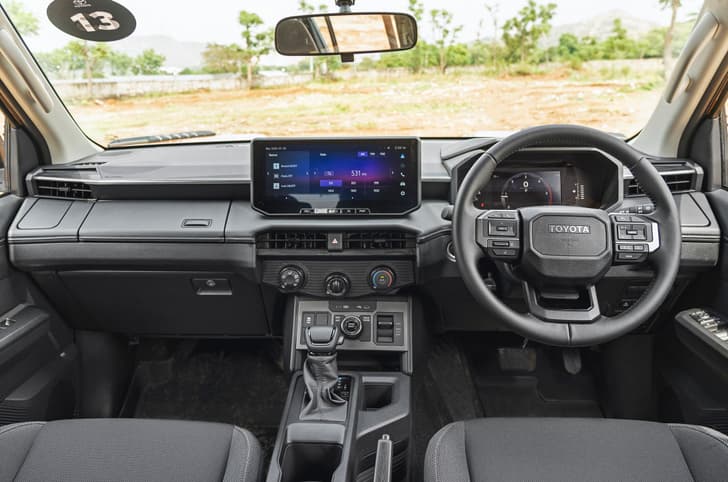
Like the front-end styling, the new dashboard sees a big departure is styling too, very retro-modern with straight lines and chunky elements, similar to the Land Cruiser Prado. It houses rectangular AC vents and a pop-up center touchscreen with chamfered lower edges. The steering wheel looks like a straight lift from the Prado with the same three spoke design, rectangular center boss and chunky rectangular buttons.
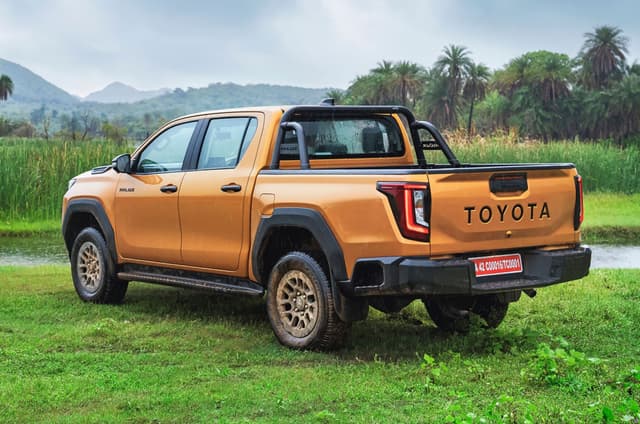
The 8th gen Hilux received a larger interior cabin volume and this cabin carries over to the new 9th gen car, space inside is thus decent but going by the large vehicle footprint you’d be forgiven if you expected more. At the rear, legroom is adequate even with a taller adult seated front, the seat backrest is still upright when seen against regular SUV but the seats themselves have been reprofiled and that makes it feel just a bit more reclined than before. Headroom is good and seating three adults at the rear is possible but will feel sung. At the front, the seats feel nice and supportive and are well profiled with prominent side bolstering that should suit a wide body frame well. They are also upholstered in a fabric that feels nice to the touch. The load bed is large enough for stuff like camping gear but it’s quite high off the ground so you’ll have to haul stuff in and out. The bumper has an integrated step at the rear and on either side as well, to make this easier. Toyota has not yet disclosed payload capacity but expect it to remain the same as before at 470kgs
Safety
High on safety kit, but many comfort and convenience features missing
The new Hilux comes in three grades with the top spec car featuring kit like a 360-degree camera view – though resolution is poor – an 8-inch digital instrument panel and a 12.3-inch central touchscreen with wireless phone connectivity. The native OS styling appears quite outdated but the screen resolution is good. There’s a wireless phone charging slot but quite deep and retrieving you phone needs slim hands.
Besides these and basic bits like power windows and ORVMs, there’s not much else on the new Hilux. Features like auto HVAC, powered or ventilated seats, rear defogger are all missing even at the top spec car.
Safety kit is good, with 7 airbags standard on all variants as is also ESP, a tyre pressure monitoring system however is only present on the top variant. As for a crash rating the new Hilux does not come with a Bharat or Global NCAP rating but the Australia spec scores 5-stars under the ANCAP protocol.
Performance
The new Hilux carries on with the same 2.8 liter 4-cylinder diesel. It makes an identical 204 hp and 500Nm of torque. A 6-speed torque convertor automatic is now the only gearbox option and for the first time Toyota India is offering the Hilux with a 4X2 drivetrain too.
There are three drive modes – Eco, Normal and Sport, all feel quite useable. Performance is strong and even when pushed hard it never feels like its out of breath. There’s a good amount of power to be had low down in the rev range and through a forest trail with stones and muck it was easy modulating power to keep momentum.
Shifts are expectedly smooth from the 6-speed autobox and in Sport mode the downshifts are quick enough both when left to its own system or via inputs from the gear lever.At high revs the engine does get vocal, but for what is a workhorse its quite acceptable. In fact, at every day motoring speeds sound levels are low and refinement is excellent, with minimal to no vibrations around the cabin. Toyota says they have worked on improving this aspect with both hydraulic and shear type engine mounts, a stiffened body frame and better cabin insulation.
Mileage and Efficiency
With a kerb weight of over two tonnes, expect single digit real world efficiency figures
Toyota have yet to disclose ARAI rated fuel efficiency figures but given the carry over powertrain expect a similar figure of around 12kpl on the standard test cycle. In real world usage figures will hover in the single digit zone and only relaxed highway cruising would see you get double digits.
Comfort and Handling
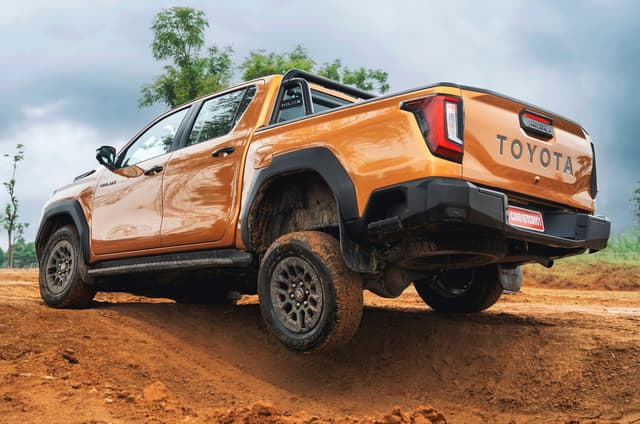
Comfy and unfazed over the big stuff but skittish and firm on smaller ruts and bumps Suspension architecture carries over with an independent double wishbone coil spring setup at the front and a rigid axle with leaf springs at the rear. Toyota says they have reworked it to bring in a bit more comfort, it’s hard to say in isolation and perhaps a back-to-back drive would indicate this. On its own, it can soak up the tough bits like large rocks and deep potholes, sharp edges too are well smoothened. Through a forest trail strewn with loose rocks it felt confident and sure footed. Much of the trail was manageable in 4X2 mode, but some bits required 4X4 which was all too easy for the Hilux. There’s also a 4-Low ratio as well as terrain modes that help traction over loose surfaces.
Where is gets unsettled is over the smaller ruts and bumps that really shake up the cabin. The main reason here is the rigid rear-axle which with the load bed empty simply skips over these imperfections resulting in a skittish and bouncy ride. Rear passengers in particular will feel this more. A weighed down rear will improve things but will not bring this to passenger SUV comfort levels.
As for handling, high-speed stability is good but you know it’s a heavy car and you can feel its weight through corners. As before, steering effort remains heavy at low speeds and with the cars massive length it feels quite ponderous.
Value for Money
4X2 makes it affordable than before, but there’s lots of features missing
Toyota has launched the new Hilux with the top variant priced the same as before; Rs 36.69 lakh ex-showroom India while the entry 4X2 variant starts lower than any previous variant coming in at Rs 31.99 lakh ex-showroom. But in doing so there’s a lot of features missing even going by its predecessors list. Its appeal then depends on which aspect of its ‘lifestyle pickup’ description you value more.
It’s sharp styling and sheer size give it that lifestyle vehicle presence, however inside it feels utilitarian, the cabin isn’t premium with regards to materials and its very under equipped. The heavy steering and bouncy ride also mean a workhorse like experience rather than luxury SUV.
But that workhorse bit is exactly where the Toyota Hilux excels. The load bed is handy and can haul odd bits of gear, the engine it torquey and powerful and what’s nice is that its refined too. The 4X4 system is very capable and it’s got tough bones that will outlast pretty much anything you can throw at it. If a luxury SUV is what you’re after, you’ll be better off elsewhere, but if you’re looking for a rough and tough, go anywhere, do anything, outdoors kind of vehicle that looks the part and plays it too, then in all probability your search will end right here.
PHOTO GALLERY